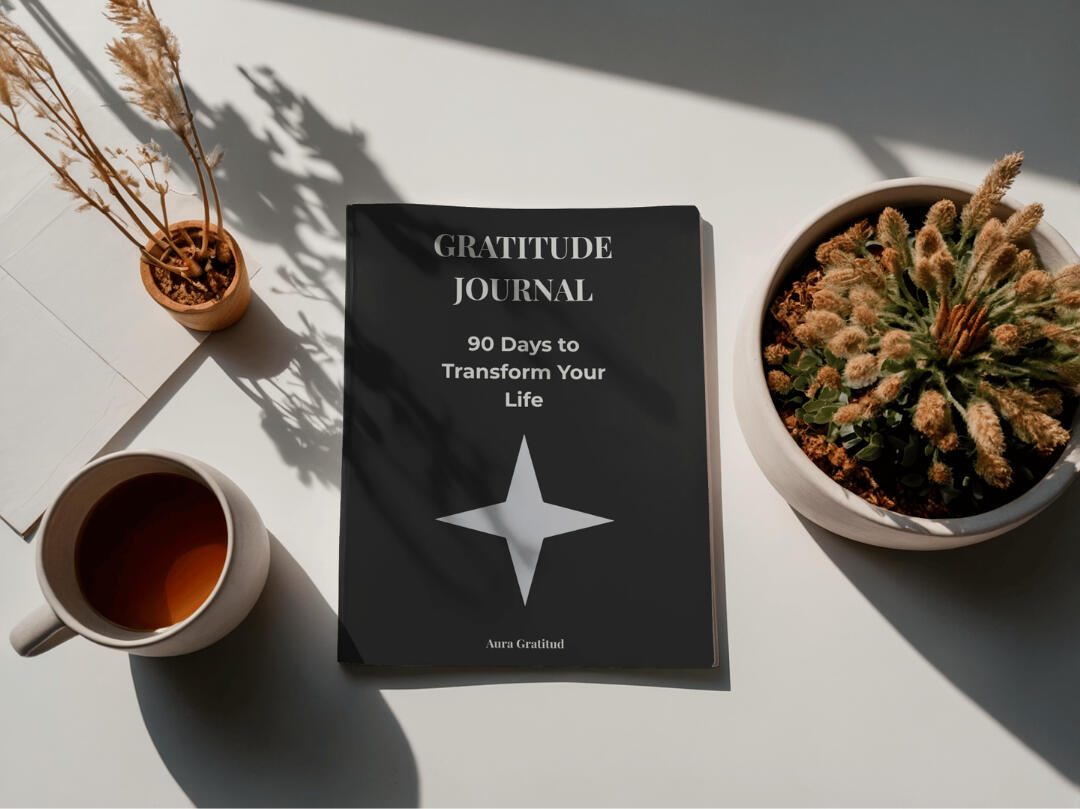
The 11 PM Decision-Fatigue Trap
After twelve hours of emails, logistics, and micro-decisions, your prefrontal cortex is running on fumes. Opening an empty notebook forces your brain to solve four questions before writing a single word: What topic? How long? Do I recap my day? Does this sound meaningful?
Within three nights, that tiny friction loses to your smartphone every single time.
Why 90 Identical Open-Space Pages Outperform Complex Planners
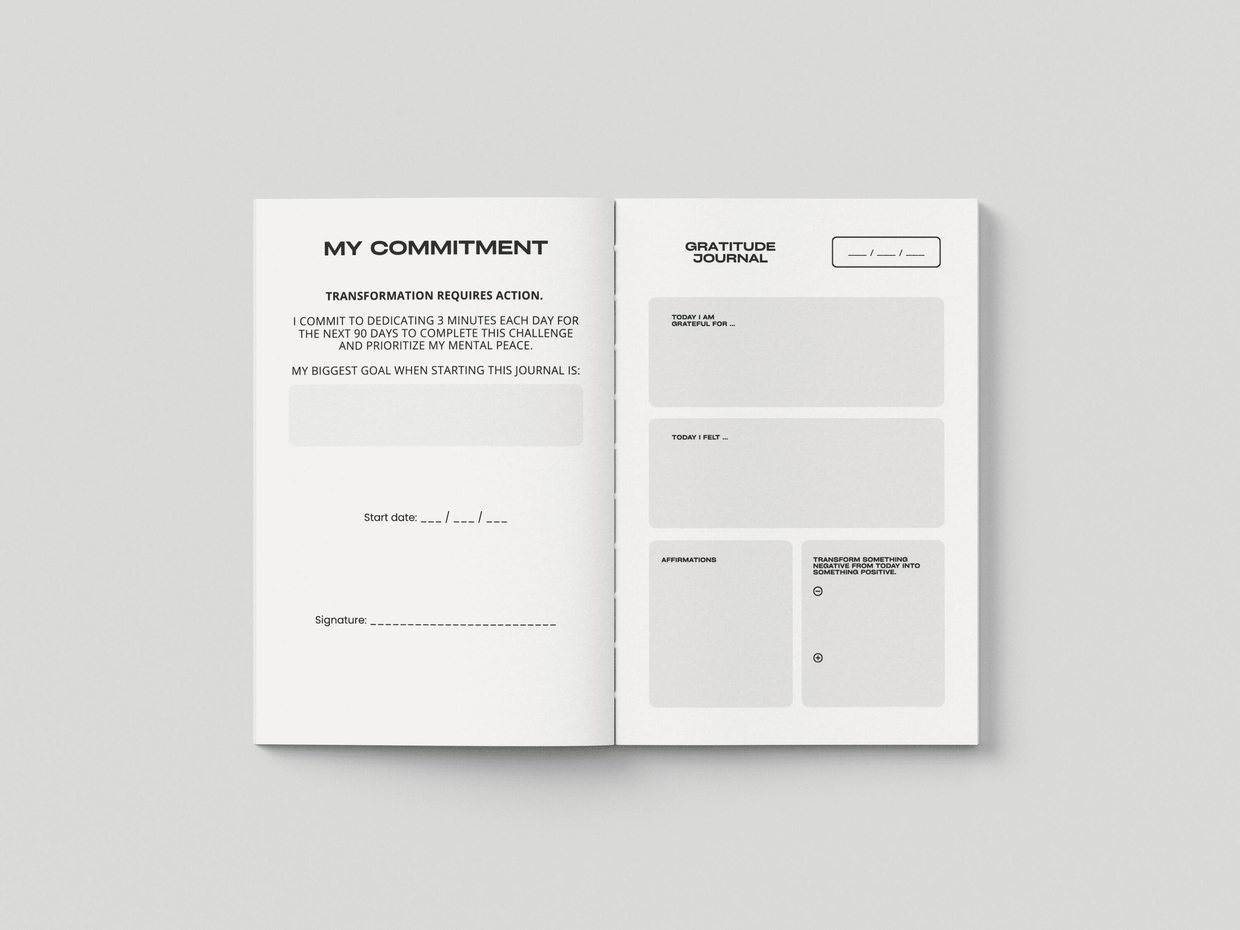
Habit researchers at University College London (Lally et al.) showed that automatic routines form across 66 to 90 days of repeating the exact same low-friction cue. When every daily page contains the exact same four unlined boxes—Today I am grateful for…, Today I felt…, Affirmations, and Transform something negative (⊖ → ⊕)—two things change immediately:
- Zero blank-page dread: You never decide how to start; you fill four concise spaces in roughly 180 seconds.
- Visible self-awareness: Because the four prompts stay constant for 90 nights, repeating triggers and quiet wins stand out clearly when you flip back.
Blank Notebook vs. Phone App vs. The 90-Day 4-Box Paperback
| Factor | Blank Notebook | Phone App | 90-Day 4-Box Paperback (~$11) |
|---|---|---|---|
| Bedtime friction | High (blank-page paralysis) | Medium (screens & alerts) | Near zero (4 clear unlined boxes) |
| Average duration | 15–30 minutes | 5–10 minutes | ~3 minutes flat |
| Distraction risk | None | One swipe from social media | 100% screen-free off-switch |
| 90-day follow-through | Rarely past Day 5 | Notifications muted | Signed Day-1 commitment + 90 undated pages |