Your body keeps the score of every thought you never put down.
A 3-minute expressive writing ritual that signals safety to an overworked nervous system.
High-functioning burnout rarely looks like a breakdown. It looks like a clenched jaw on a quiet Sunday, chest tightness with no single cause, and a brain that stays on guard long after the workday ends.

Quiet signs your nervous system is still in survival mode
Exhausted yet wired
You drag through the afternoon, then feel strangely restless the moment it's time to rest.
Everything feels urgent
A short text message or messy kitchen triggers a disproportionate spike of tension.
Braced body
You repeatedly catch your shoulders elevated, jaw tight, or breath shallow without noticing.
Guilt when resting
Stillness feels uncomfortable because your system has linked pausing with falling behind.
Why you cannot think your way out of physical tension
Your autonomic nervous system struggles to distinguish a physical emergency from an endlessly replayed worry. As long as stress stays abstract inside your skull, your amygdala keeps signaling alert—keeping cortisol high and your calming parasympathetic branch offline.
Decades of expressive writing research by psychologist James Pennebaker, paired with UCLA brain-imaging studies on affect labeling (Lieberman et al.), reveal a remarkably simple lever: translating vague internal distress into concrete words on paper shifts neural activity away from the amygdala and into the prefrontal cortex.
On paper, a storm stops being something you are trapped inside and becomes something contained that you can close for the night.
The 3-minute somatic paper download (try it free today)
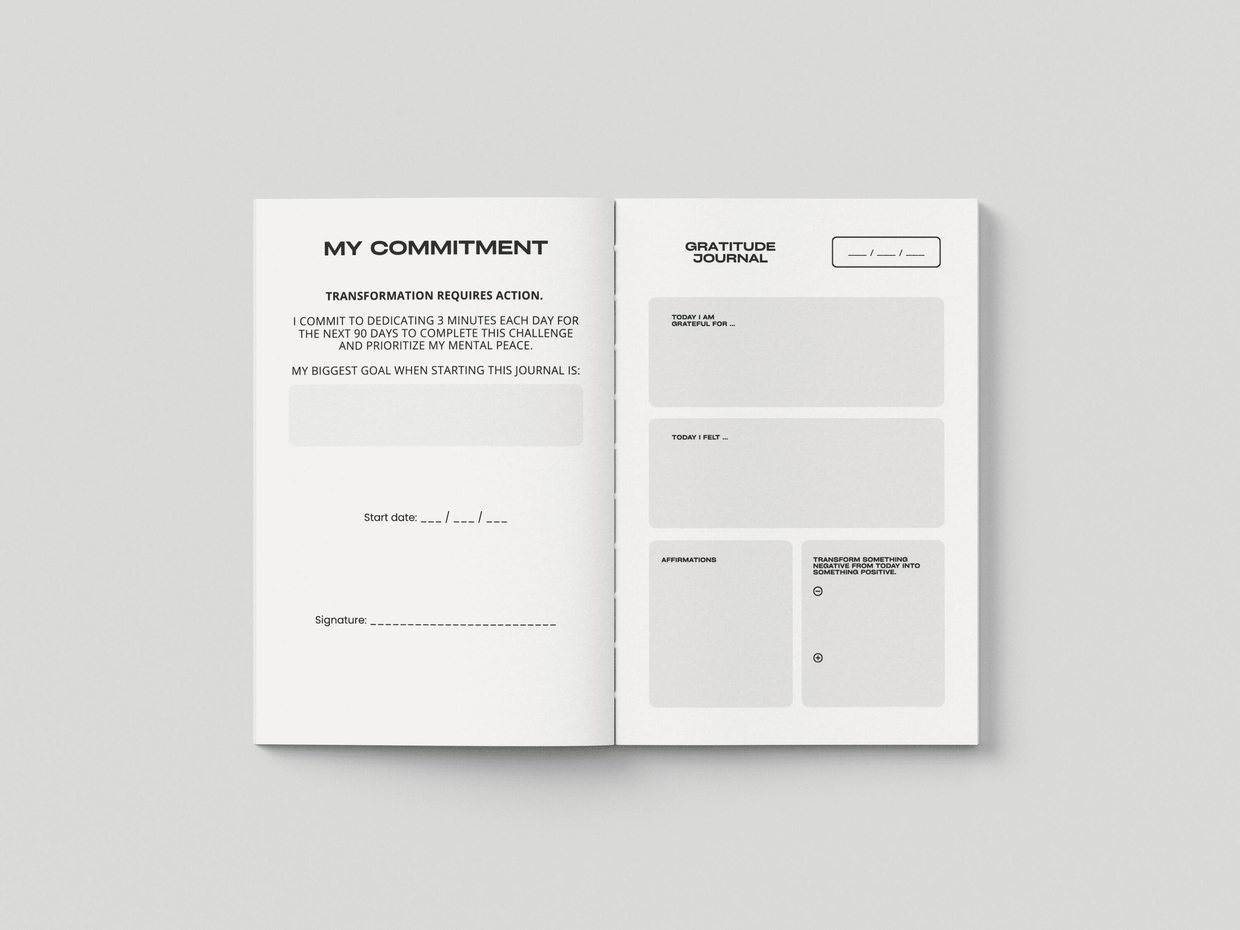
Before buying anything, try this four-step sequence on a plain sheet of paper—it maps straight onto the four open boxes of every page inside The 90-Day Gratitude Journal.
Today I felt…
Scan your jaw, chest, and stomach. Write the body cue and one word: 'Chest tight — overstimulated.'
Transform the negative (⊖ → ⊕)
Dump the stress loop beside (⊖). Beside (⊕), write one grounded truth: what is actually in your control tonight?
Today I am grateful for…
Record three ordinary moments your body felt safe today: warm water, sunlight, a quiet meal.
Affirmations
Give your nervous system explicit permission: 'The day is complete. I am allowed to rest.'
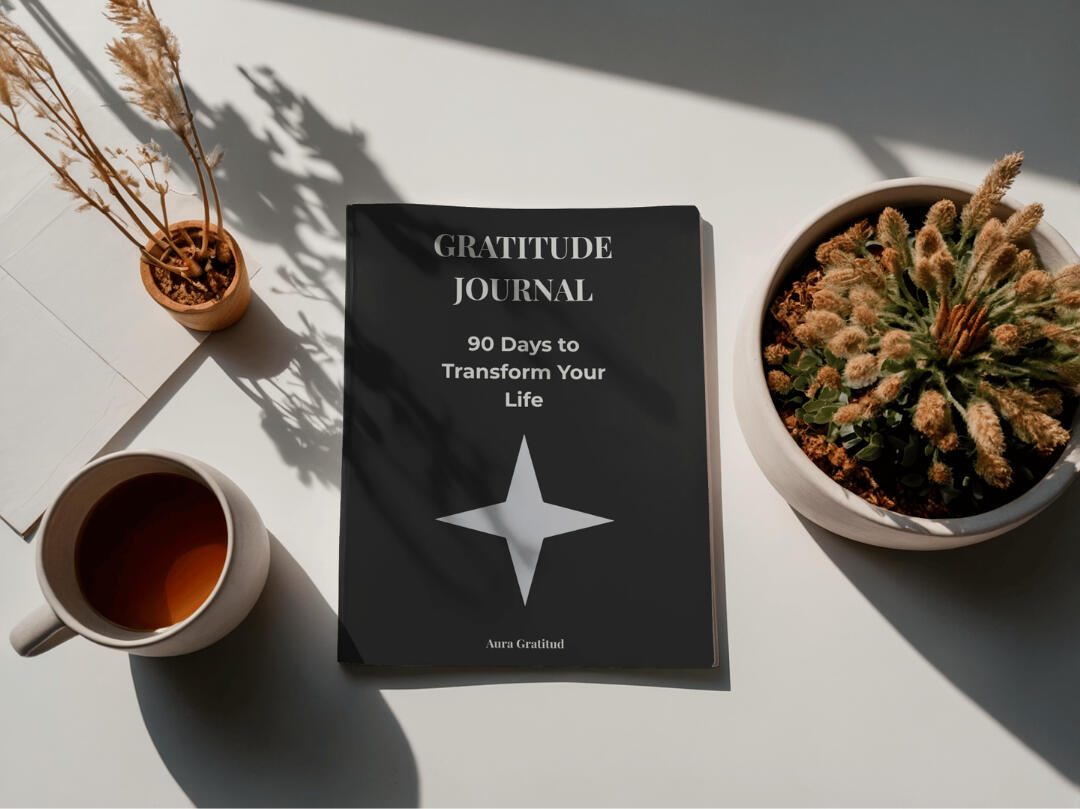
One matte black book. Ninety calm nights.
Instead of hunting for loose paper or staring at a blank notebook at 11 PM, keep the exact four open-space boxes waiting beside your bedside lamp—beginning with a signed My Commitment page on Day 1.
Your first 3-minute physical offload on paper—no screens, no rules, no word count.
You begin spotting tension cues in your body hours earlier, before burnout snowballs.
Ninety written signals of safety—and a clear personal map of what drains vs. restores you.
Built for you if
- Burned-out professionals, caregivers, and students who carry stress physically.
- People too drained at night for complicated 30-minute self-care routines.
- Anyone wanting a calm, science-aligned analog practice alongside daily life or therapy.
Skip it if
- You are seeking clinical trauma therapy or medical treatment (this is a daily reflection tool, not medical care).
- You prefer audio-only meditation apps over writing by hand.
Common Questions
Is this a substitute for medical care or somatic therapy?
No. It is an everyday personal-reflection notebook informed by expressive writing and emotion-labeling research. Many readers use it as a supportive companion alongside professional care.
I feel too tired to journal—will I actually use this?
That is precisely why the interior uses four unlined open boxes with zero rigid rules. Even two short bullet words per box take under 3 minutes.
How much does the paperback cost?
Around $11 on Amazon (96 pages, matte black paperback, shipped directly by Amazon Prime).
Explore Related Routines

A 3-minute paper ritual for the mind that refuses to power down at night.
Close your day with quiet evidence instead of rehearsing tomorrow's problems in the dark.

Cheap dopamine is quietly fracturing your attention span.
Reclaim deep focus in 3 analog minutes a day—before notifications hijack your mind.

Exhausted from shrinking yourself to keep everyone else comfortable?
Three private minutes of radical honesty on paper—the quiet foundation of self-trust.